

Introduction
Eye injuries are one of the most common workplace accidents, yet they are also the most preventable. Choosing the best safety glasses for work is not just about comfort—it is about protecting vision, meeting safety standards, and staying productive on the job. Whether you work in construction, manufacturing, laboratories, or industrial environments, wearing the right safety eyewear can make a critical difference.
Why Safety Glasses Are Essential in the Workplace
Workplace hazards such as flying debris, dust, chemicals, and bright light can cause permanent eye damage. Standard eyeglasses are not designed to handle these risks. Certified safety glasses are built to withstand impact and provide full eye coverage, reducing the chance of injury.
Employers are also responsible for ensuring proper eye protection is used. This is why most job sites require ANSI Z87.1 approved safety glasses.
Understanding ANSI Z87.1 Safety Standards
ANSI Z87.1 is the recognized standard for occupational eye protection in the United States. Safety glasses that meet this standard are tested for:
- High-impact resistance
- Lens durability
- Frame strength
- Optical clarity
When shopping for safety eyewear, always look for permanent Z87 markings on the frame or lens.
Prescription Safety Glasses vs Regular Safety Glasses
Workers who wear prescription glasses often face a difficult choice. Fortunately, modern safety eyewear offers multiple solutions.
Prescription Safety Glasses
Prescription safety glasses combine vision correction with certified protection. They are ideal for:
- Full-time workers
- All-day wear
- Improved comfort and visibility
Over-the-Glasses Safety Glasses
These are designed to fit over regular eyeglasses and are best for:
- Temporary use
- Visitors on job sites
- Budget-friendly protection
Both options can be ANSI approved when properly manufactured.
Key Features to Look for in Safety Glasses
Not all safety glasses offer the same level of protection. The best models include:
- Polycarbonate lenses for impact resistance
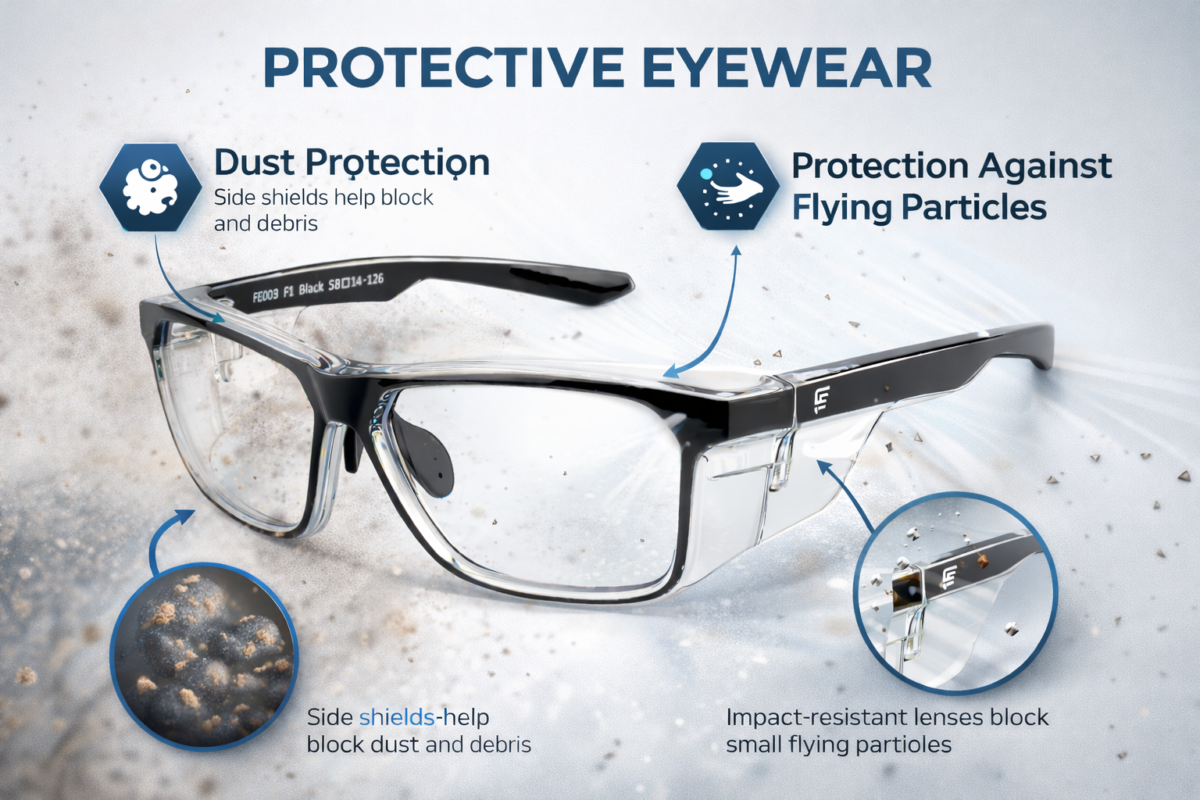
- Side shields for peripheral protection
- Anti-fog coating for humid environments
- UV protection for outdoor work
- Lightweight frames for comfort
Choosing the right combination improves compliance and safety.
Best Safety Glasses for Construction and Industrial Work
Construction and industrial workers face high-risk conditions daily. The best safety glasses for these environments should:
- Stay secure during movement
- Resist dust and debris
- Withstand high-impact hazards
Prescription safety glasses with side shields are often the preferred option for professionals working long shifts.
Safety Glasses for Laboratories and Chemical Use
Laboratory and chemical environments require added protection. In these settings, chemical safety goggles or sealed safety glasses are recommended to prevent liquid splashes and airborne particles from reaching the eyes.
Comfort and Fit: Why It Matters
Uncomfortable safety glasses are often removed, increasing the risk of injury. Proper fit ensures:
- Better compliance
- Reduced eye strain
- Increased productivity
Adjustable temples, soft nose pads, and correct sizing play a major role in comfort.
How to Maintain and Replace Safety Glasses
To keep safety glasses effective:
- Clean lenses daily
- Store them in protective cases
- Replace scratched or damaged lenses
- Inspect frames regularly
Damaged safety eyewear may no longer meet safety standards.
Final Thoughts
Choosing the best safety glasses for work is an investment in long-term vision health and workplace safety. Whether you need prescription safety glasses, over-the-glasses protection, or chemical safety goggles, always prioritize ANSI certification, proper fit, and comfort. The right eyewear not only protects your eyes but also helps you work with confidence and clarity.